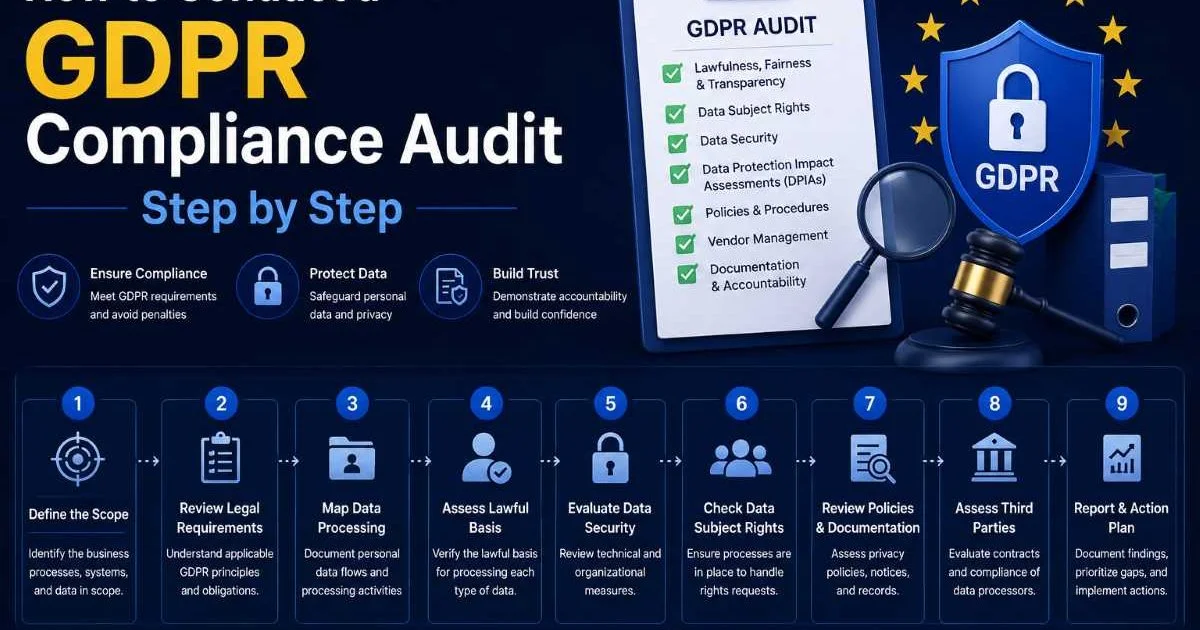
A GDPR compliance audit is a systematic evaluation of how an organization collects, processes, stores, and shares personal data, measured against the requirements of the EU General Data Protection Regulation.
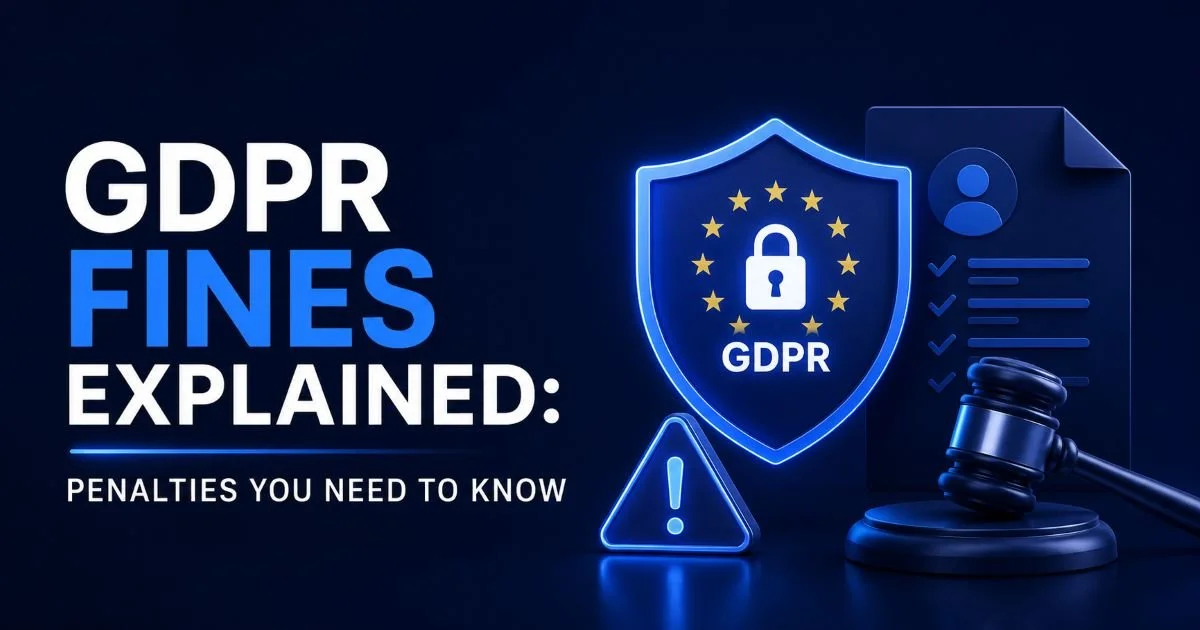
For compliance and privacy managers, running a thorough GDPR compliance audit has become a baseline expectation rather than a one-off project. The regulation carries fines of up to 4% of annual global turnover, and enforcement actions have increased every year since 2018.
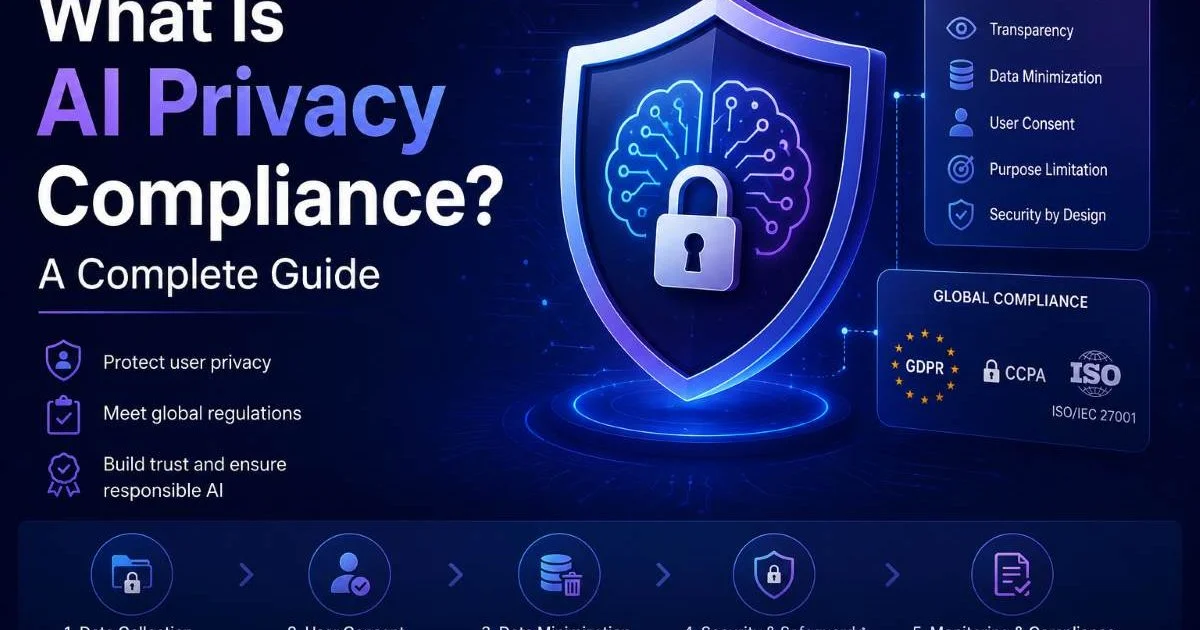
Yet many organizations still rely on manual spreadsheets and outdated checklists that miss real vulnerabilities. AI-powered tools now allow teams to check privacy risks, review policies, manage consent, and spot data protection gaps in minutes instead of months.
This article explains what a GDPR compliance audit actually involves, how modern AI guidance accelerates the process, and why privacy managers who skip regular audits are playing a dangerous game with their organization's reputation and budget.
Key Takeaways
- A GDPR compliance audit evaluates data practices against all regulation articles systematically.
- AI-driven tools reduce audit timelines from months to days or even minutes.
- Consent management failures account for a significant share of enforcement actions.
- Privacy risk assessment should be continuous, not a once-a-year checkbox exercise.
- Automated gap detection catches issues that manual reviews consistently overlook.
What Is a GDPR Compliance Audit and How Does It Work?
Core Components of the Audit Process
At its core, a GDPR compliance audit maps every touchpoint where personal data enters, moves through, or exits your organization. This includes website forms, CRM databases, third-party integrations, employee records, and marketing platforms. The audit measures each touchpoint against specific GDPR articles: lawful basis for processing (Article 6), data subject rights (Articles 15 to 22), data protection by design (Article 25), and breach notification obligations (Article 33). The output is typically a gap analysis that ranks findings by severity.
The process begins with a data inventory. You cannot protect what you do not know exists. Auditors catalog every data processing activity, identify the legal basis for each, and document retention periods. They then perform a privacy risk assessment to evaluate the likelihood and impact of potential breaches or non-compliance events. This risk-based approach mirrors the regulation's own philosophy, focusing resources where the threat to individual rights is greatest.
Documentation review forms the third pillar. Auditors examine privacy notices, data processing agreements, records of processing activities (ROPA), and Data Protection Impact Assessments (DPIAs). They verify that documented policies match actual practice, because regulators care about what you do, not just what you write. A complete audit also interviews key stakeholders to understand day-to-day data handling beyond what policy documents describe.
Start your audit with a data mapping exercise; you cannot assess risks for data flows you haven't documented.
How AI Accelerates Each Step
Modern AI-powered GDPR checker tools can scan privacy policies, cookie banners, consent forms, and data processing agreements in minutes. They flag ambiguous language, missing disclosures, and consent mechanisms that fail to meet the regulation's "freely given, specific, informed, and unambiguous" standard. Where a manual review of a single privacy policy might take a legal professional two hours, an AI tool can produce a structured report with specific remediation suggestions in under five minutes. IBM's research on AI and privacy highlights how machine learning models are increasingly capable of identifying compliance patterns across large document sets.
Why Regular Audits Matter for Privacy Managers
Financial and Reputational Stakes
The numbers speak for themselves. European Data Protection Authorities issued over €2.1 billion in GDPR fines between 2018 and 2023. Meta alone received a €1.2 billion penalty in 2023 for improper data transfers. But fines are just the visible portion of the cost. Organizations that suffer enforcement actions also face litigation from data subjects, operational disruption during investigations, and lasting brand damage. A GDPR compliance audit is the most direct way to identify vulnerabilities before a regulator or data breach exposes them.
Beyond penalties, regular audits build institutional knowledge. Every audit cycle reveals how data practices have drifted since the last review. New marketing tools get adopted, employee turnover changes who handles sensitive data, and third-party vendors update their own terms. Without periodic reassessment, your compliance posture degrades silently. Privacy managers who run quarterly or biannual audits catch these shifts early and correct them before they compound into systemic issues.
Operational Benefits Beyond Compliance
Audits also produce concrete operational improvements. Organizations that conduct regular privacy risk assessments tend to maintain cleaner databases, reduce unnecessary data storage costs, and respond to data subject access requests faster. When you know exactly what data you hold and where it lives, fulfilling a deletion request becomes a straightforward task rather than a panicked scramble. These efficiencies accumulate over time and often justify the audit investment on operational grounds alone.
There is also a competitive dimension. B2B buyers increasingly include GDPR compliance verification in their procurement checklists. Having documented, recent audit results gives your sales team a ready answer during due diligence. In sectors like healthcare, fintech, and SaaS, proof of regular audits can be the deciding factor in winning enterprise contracts. Privacy maturity is becoming a market differentiator, not just a legal obligation.
"Privacy maturity is becoming a market differentiator, not just a legal obligation."
Common Misconceptions About GDPR Audits
The most persistent misconception is that a GDPR compliance audit is a one-time event. Some organizations completed their initial compliance project in 2018 and assumed the work was done. The regulation itself is a living framework, supplemented by evolving guidance from the European Data Protection Board, national authority decisions, and court rulings. What was compliant in 2018 may not be compliant today, especially in areas like cookie consent, international data transfers post-Schrems II, and AI-driven profiling.
Another common error is treating audits as purely legal exercises. While legal review is a component, effective audits require technical assessment too. Can your systems actually honor a right-to-erasure request across all databases and backups? Is your encryption sufficient for data at rest and in transit? These questions demand technical investigation that goes beyond reading policy documents. The best audit teams combine legal, technical, and operational expertise.
An audit that only reviews documents without testing actual systems will miss the most dangerous compliance gaps.
Some privacy managers also believe that small organizations are exempt from serious audit requirements. The GDPR applies regardless of company size if you process EU residents' data. A 20-person SaaS startup handling customer data from European clients faces the same regulatory obligations as a multinational bank. The scale of the audit may differ, but the obligation does not. Even small teams benefit from using a gdpr checker tool to automate what would otherwise require expensive outside consultants.
| Focus Area | Small (1 to 50 employees) | Mid-size (51 to 500) | Enterprise (500+) |
|---|---|---|---|
| Data Mapping | Simplified inventory | Department-level mapping | Full enterprise data flow |
| DPIA Requirement | Case-by-case | For high-risk processing | Systematic across all units |
| DPO Appointment | Usually optional | Often required | Mandatory |
| Vendor Assessment | Key vendors only | All data processors | Tiered vendor risk program |
| Audit Frequency | Annual minimum | Biannual recommended | Quarterly or continuous |
Finally, there is the misconception that AI tools replace human judgment in audits. They do not. AI dramatically accelerates data collection, pattern recognition, and initial risk scoring. But interpreting results, making judgment calls about proportionality, and designing remediation plans still require experienced professionals. Think of AI as the most capable research assistant you have ever worked with, not as a replacement for the privacy manager's expertise and contextual understanding.
AI audit tools are most effective when combined with human review; automated findings should always be validated by qualified staff.
How GDPR Audits Relate to Broader Privacy Practices
The Privacy Policy Review Connection
A privacy policy review is a subset of the broader audit, but it deserves special attention. Your privacy policy is often the first document regulators examine during an investigation. It is also the primary interface between your organization and data subjects regarding their rights. AI tools can scan privacy policies against GDPR Article 13 and 14 requirements, checking for completeness of disclosures, readability, and accuracy relative to your actual processing activities. Discrepancies between policy language and practice are among the most commonly cited violations.
Privacy policies also need to reflect current processing activities accurately. If you added a new analytics provider or started using AI for customer service last quarter, your policy must disclose those activities. A regular privacy policy review, ideally tied to each audit cycle, prevents the common problem of policies that describe an organization that existed two years ago. This is where continuous monitoring tools add real value, flagging when new data processing activities lack corresponding policy coverage.

Consent Management and Cloud Data Security
Consent management sits at the intersection of legal compliance and user experience. The GDPR requires that consent be as easy to withdraw as it is to give, yet many organizations still use dark patterns that make opting out unnecessarily difficult. A thorough audit evaluates consent flows across all channels: websites, mobile apps, email marketing platforms, and offline touchpoints. It checks that consent records include timestamps, the specific purposes consented to, and the version of the notice presented at the time of collection.
Cloud infrastructure adds another layer of complexity. When personal data resides in cloud environments, cloud data security best practices become directly relevant to GDPR compliance. Auditors need to verify that cloud providers have appropriate data processing agreements, that data residency requirements are met, and that technical safeguards like encryption and access controls align with the sensitivity of the data stored. Organizations using multi-cloud architectures face particularly complex audit scenarios, as data may flow between providers in ways that are not immediately visible.
Data protection gaps often emerge at the boundaries between systems. The handoff between a marketing platform and a CRM, between an internal database and a cloud backup service, or between your primary systems and a third-party analytics tool. These integration points are where data can leak, be retained beyond its lawful period, or be processed without adequate safeguards. Effective audits test these boundaries specifically rather than auditing each system in isolation.
Map every data integration point between systems and audit these handoffs specifically; most data protection gaps hide at system boundaries.
Frequently Asked Questions
?How do I start a data inventory if our processing activities are undocumented?
?Can AI tools replace a manual GDPR audit entirely, or just speed it up?
?How long does a GDPR compliance audit typically take with AI assistance?
?Is a once-a-year GDPR audit enough to avoid enforcement action?
Final Thoughts
A GDPR compliance audit is not a bureaucratic formality. It is a practical tool that protects your organization from financial penalties, operational disruption, and reputational harm.
AI-powered tools have made the audit process faster and more accessible, allowing privacy managers to run continuous assessments rather than annual snapshots.
The organizations that treat compliance as an ongoing discipline, combining automated detection with human expertise, are the ones that consistently stay ahead of regulatory expectations and earn the trust of their customers.
Disclaimer: Portions of this content may have been generated using AI tools to enhance clarity and brevity. While reviewed by a human, independent verification is encouraged.